

![[GRADE S] SHANLING M6 PRO HiFi DAP Compact Music Player DAC 2x AK4497 32bit 768kHz DSD128 Titanium](https://www.audiophonics.fr/72951-thumb_default/shanling-m6-pro-hifi-dap-compact-music-player-dac-2x-ak4497-32bit-768khz-dsd128-titanium-sbs.jpg)
![[GRADE A] SHANLING CD-S100 (23) CD Player DAC AK4493 Sanyo HD850 USB 32bit 384kHz DSD512 Black](https://www.audiophonics.fr/69128-thumb_default/shanling-cd-s100-23-cd-player-dac-ak4493-sanyo-hd850-usb-32bit-384khz-dsd512-black.jpg)
![[GRADE A] SABAJ A20D 2023 DAC AK4499EX Headphone Amplifier TPA6120A2 XMOS XU316 Bluetooth 5.0 32bit 768kHz DSD512 MQA](https://www.audiophonics.fr/69108-thumb_default/sabaj-a20d-2023-dac-ak4499ex-headphone-amplifier-tpa6120a2-xmos-xu316-bluetooth-50-32bit-768khz-dsd512-mqa.jpg)
![[GRADE A] GUSTARD X26III DAC 2x ES9039SPRO NOS Streamers LAN Roon Airplay UPnP 32bit 768kHz DSD512 Black](https://www.audiophonics.fr/70815-thumb_default/gustard-x26-iii-black-sba.jpg)


![[GRADE S] TOPPING ARPEGEAR HANE In-Ear Monitors IEM Dynamic 80 Ohm 115dB 5Hz-35kHz](https://www.audiophonics.fr/66633-thumb_default/topping-arpegear-hane.jpg)


The Sound is good the Stage is deep and Wide with an Alternative OPA like Oracle II is it much better
This review has been posted for AUDIOPHONICS EVO-SABRE Balanced DAC 2x ES9038Q2M USB GPIO Raspberry Pi SPDIF Bluetooth XLR RCA 
New Customer?
Create your account 0
0 item(s) - 0,00 € No products
To be determined Shipping
0,00 € Tax
0,00 € Total
Prices are tax included
Quantity
Total
Product successfully added to your shopping cart
There are 0 items in your cart. There are 0 items in your cart.
Total (tax incl.)
AUDIOPHONICS EVO-SABRE Balanced DAC 2x ES9038Q2M USB GPIO Raspberry Pi SPDIF Bluetooth XLR RCA

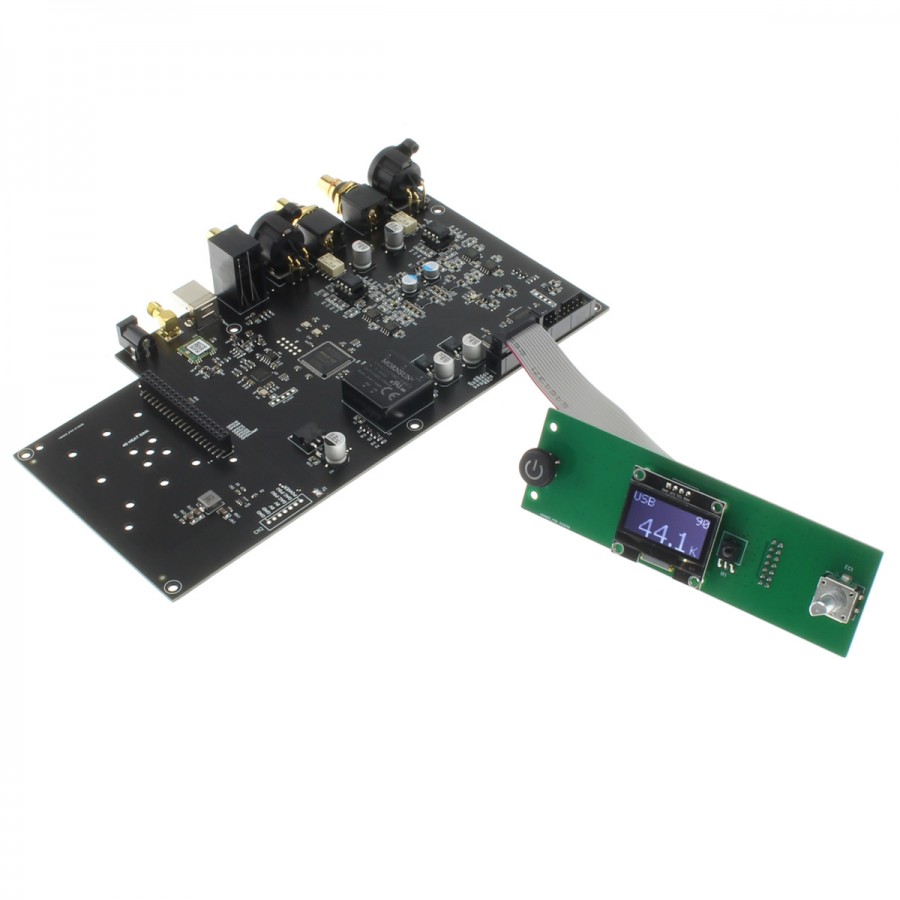
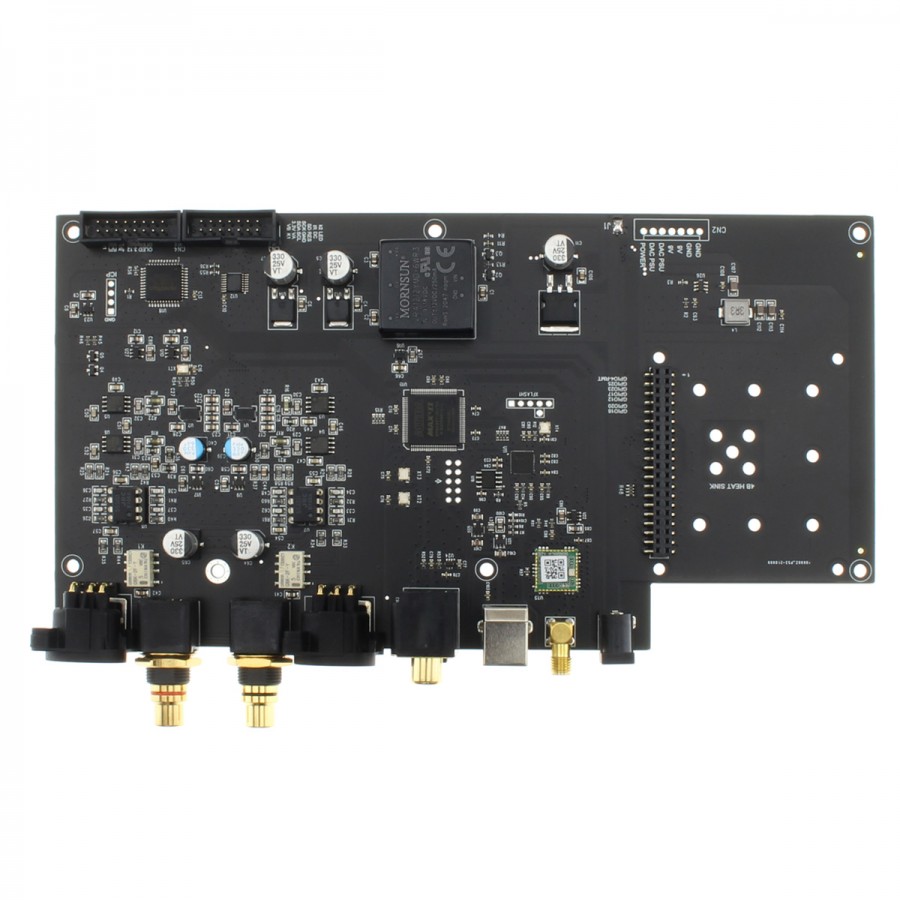
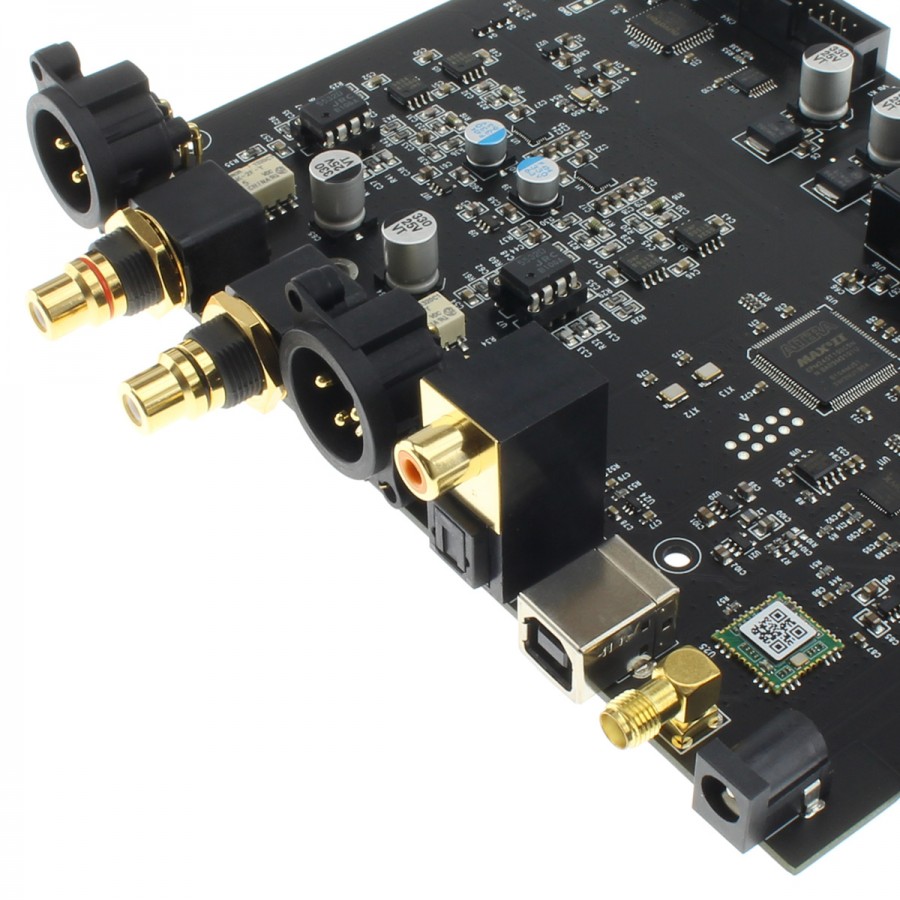
Direct successor to our famous DAC I-Sabre ES9038Q2M module, the EVO-SABRE 2x9038Q2M is a balanced version of the converter with a full range of connectors and input interfaces (SPDIF Coaxial and optical, USB, Bluetooth and I2S through GPIO). This version is more precise, more efficient and more versatile. It includes its own microcontroller, a digital OLED display with encodder and can work in total autonomy.
By buying this product you get 20 loyalty points
Reference : 14562
New product
Accessories for this product
Find here a selection of useful and/or essential accessories for this product. These are specially selected by the Audiophonics team according to the characteristics of the product.
Audiophonics EVO-SABRE
Module DAC Double SABRE ES9038Q2M Balanced SPDIF / USB / RPI 4/5 & Stand-alone
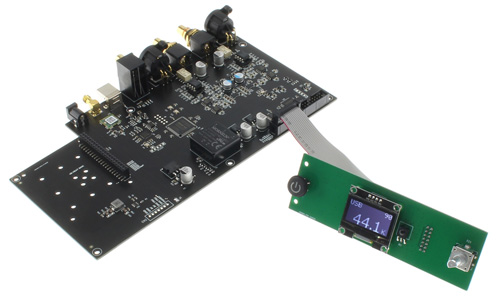
Direct successor to our famous DAC I-Sabre ES9038Q2M module, the EVO-SABRE 2x9038Q2M is a balanced version of the converter with a full range of connectors and input interfaces (SPDIF Coaxial and optical, USB, Bluetooth and I2S through GPIO). This version is more precise, more efficient and more versatile. It includes its own microcontroller, a digital OLED display with encodder and can work in total autonomy.
Of course there is still a GPIO connector with I2S input allowing the mounting of a Raspberry Pi (or some other SBC) to obtain a complete solution including both a digital audio source and a very high definition digital to analog decoding - with tremendous audio quality for its price range. Just pick and install one of the many free streaming software solution and connect the board to an amplifier or active speaker to enjoy a complete, ready-to-use high-fidelity package loaded with audio features.
The case kit associated with this DAC EVO-SABRE is available here : AUDIOPHONICS EVO DAC Aluminum case and accessories kit Black.
Here you may find a kit including all required parts to assemble a complete EVO SABRE DAC Streamer using 100% of its capacities : DAC module, Remote control, Housing, Power supply and Raspberry Pi.
ASR Review
I am happy to recommend the Audiophonics EVO Sabre given the unique functionality, form factor, and performance.

Balanced ES9038 DAC
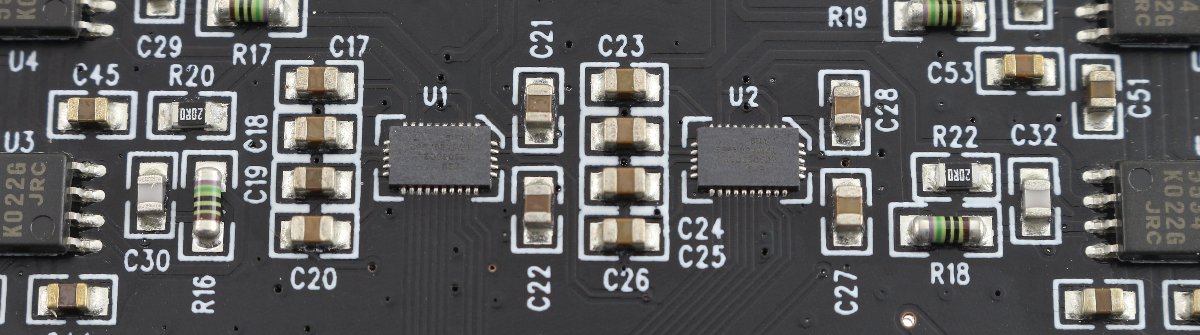
The EVO-Sabre is a high-precision DAC using two 32-bit ES9038Q2M Sabre chips integrated in dual Mono mode: each of these chips see its computing power 100% dedicated to a single channel of the stereophonic signal. This achieves a sound restitution of exceptional clarity with tremendously low crosstalk.
This component belongs to ESS flagship series and is among the best current hardware solutions for high-fidelity audio decoding. It uses HyperStream 32 BIT 768kHz architecture with native DSD support. Each one of this chips is also equipped with advanced reconstruction filters and uses some of the finest dithering techniques available on the audio market.
ESS ES9038Q2M SABRE DACs are also very popular thanks to their ability to operate volume with almost no consequences on the audio bitrate.
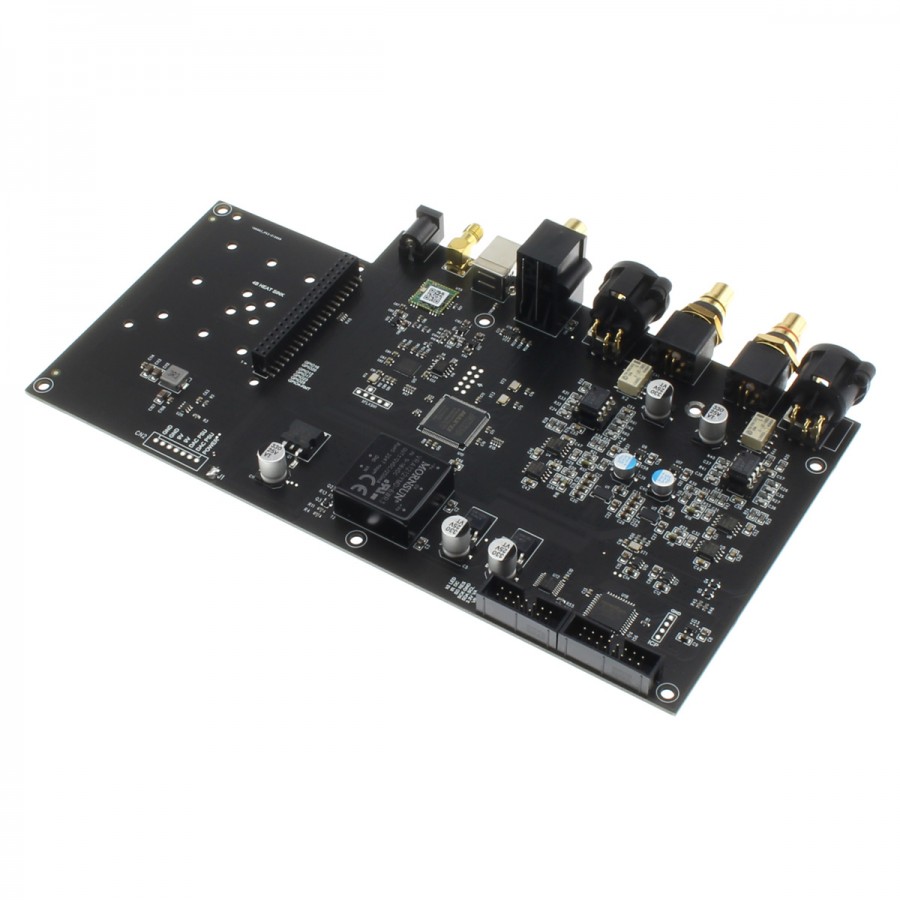
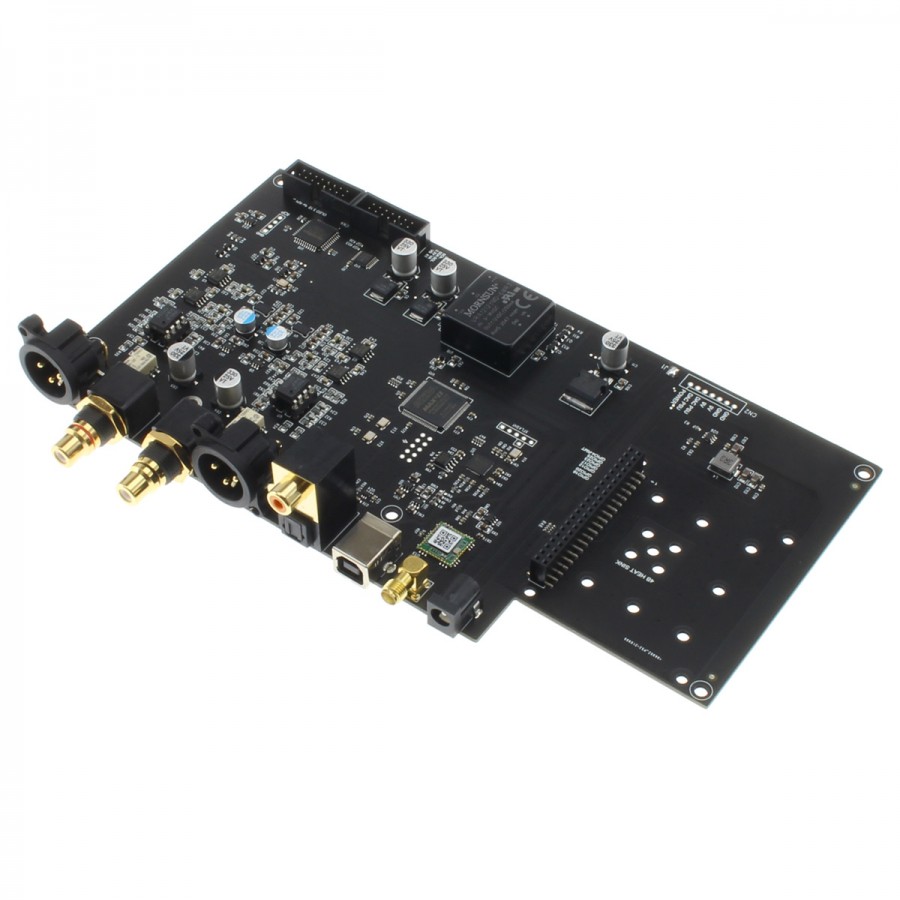
The board works in balanced and single-ended mode and offers both a balanced stereo output on 3-pole XLR connector and an single-ended stereo output on RCA connector. The module can thus be ideally suited to most integration scenarios and will easily find its place in minimalist audio projects as well as in very complex Hi-Fi installations.
Basic connections
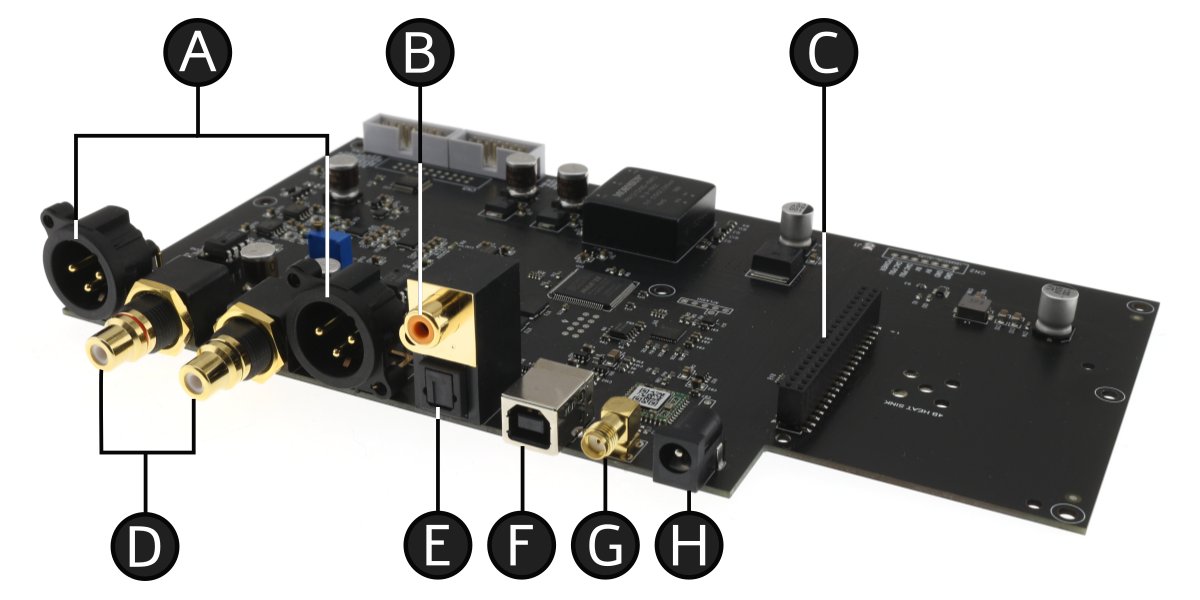
| A | XLR Output (balanced) |
| B | Coaxial Input S/PDIF |
| C | GPIO Connector |
| D | RCA Output (single-ended) |
| E | Optical Input S/PDIF |
| F | USB-2 type B Input |
| G | Bluetooth |
| H | Power-supply 9V Jack DC |
Both outputs (RCA & XLR) are active at the same time.
XMOS U208 USB Interface
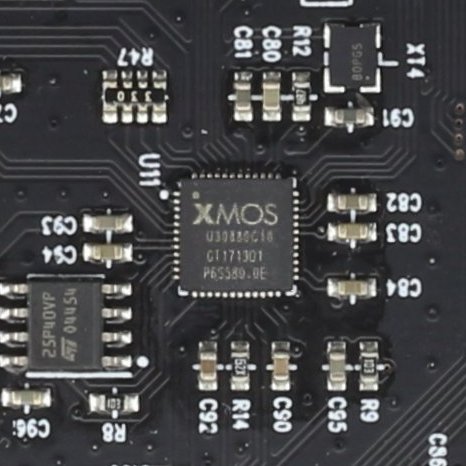
The USB-B input (USB-2) works with a XMOS U208 USB interface. This is a reference component in the field of high-fidelity music, with digital streams supports up to 32-bit 768kHz as well as (native) DSD512.
Definitely designed for high-resolution, this asynchronous USB interface has a computation capacity of 1000 MIPS all of which is dedicated to the processing of your digital audio signals with minimal jitter and noise.
When the DAC EVO-SABRE is used in conjunction with a Raspberry Pi, this high-definition USB input allows to immediately interface digital audio streams to RPI I2S up to 384kHz / DOP 128.
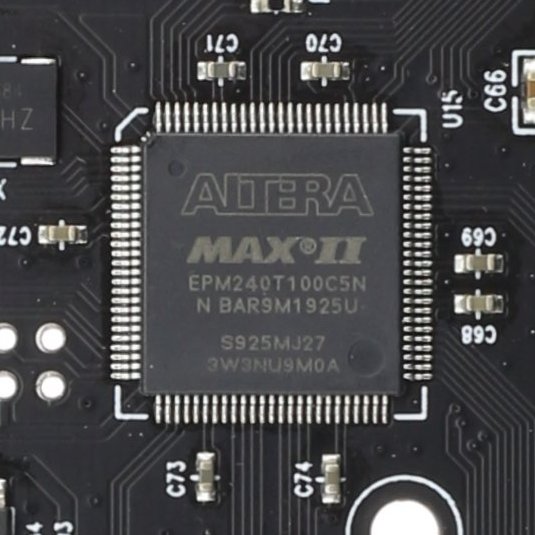
FGPA Altera Max
Unlike its predecessor, the EVO-SABRE has several inputs driven by an independent interface.
SPDIF signals are handled by a FGPA Altera Max capable of performing clean processing of the digital input streams. These digital signals are interfaced in I2S to each of the two DAC chips, which represents a significant gain in performance compared to previous generations.
The SPDIF inputs support PCM signals up to 24/192 as well as DSD 128 DOP streams.
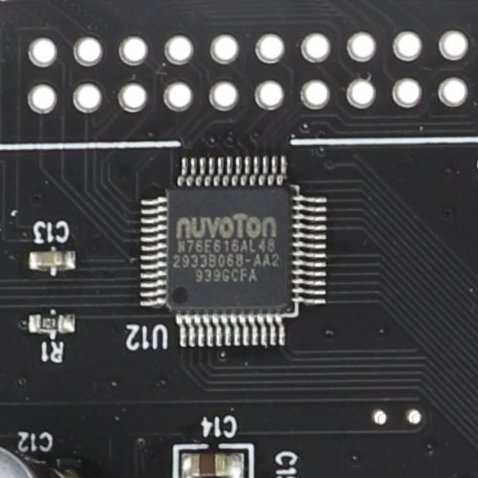
Microcontroller autoconfiguration
Thanks to an integrated microprocessor, the EVO Sabre automatically detects the format & the sampling rate of the signal source and will automatically adapt its configuration to provide the best listening performance without requiring any user intervention.
This control by CPLD chip maintains great stability while preventing decoding problems as well as the appearance of audio artifacts.
It also enables a continuous decoding of playlists with heterogeneous file types without having to worry about reconfiguring the DAC to benefit from optimal audio quality.
Optimized power stage
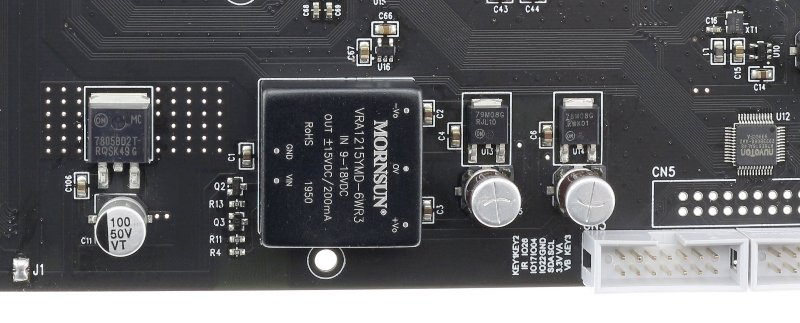
Powered by a DC 9V jack connector, the module operates from a particularly well designed power stage which allows to ensure a stable signal while reducing residual noise.
For this purpose, the PCB has a Mornsun DC / DC converter followed by two voltage regulators 79M08 / 78M08 dedicated to the analog part with is powered with +/- 8V.
The card has a separate 5V power stage dedicated to the Raspberry Pi. In this scenario, the RPI is supplied directly via its GPIO port, avoiding the need to add more connections and cables. Every configuration uses the minimum amount of cables for increased ease of use.
The card also has Ultra low noise voltage regulators dedicated to the conversion stage in order to isolate the DACs from the main power supply.
The DVCC voltage is generated from an LP5907 (regulation <6.5µV), which generates the DAC 1.2V Vref which is a critical voltage.
The AVCC voltage is generated from a dedicated ADP150 regulator (regulation <9µV).
OLED screen, controller, I/R receiver, ON/OFF switch
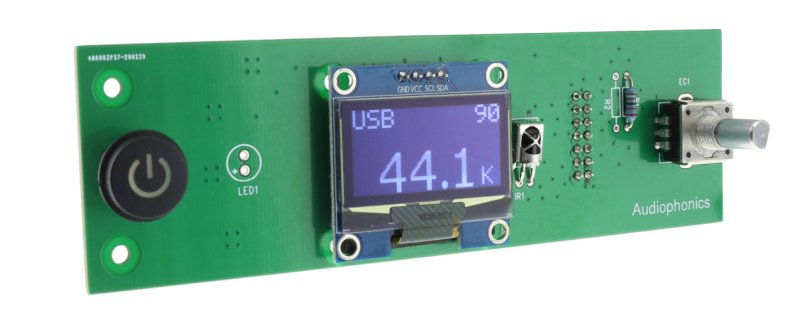
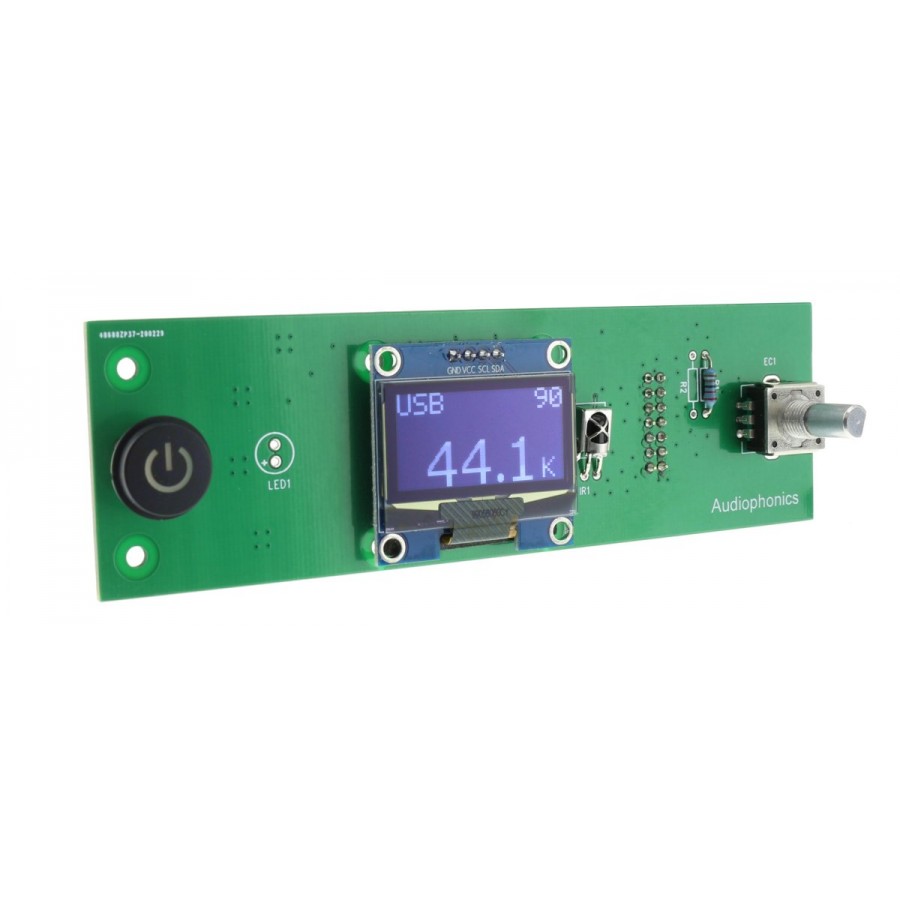
A second PCB is included witrh the module. This secondary board is equipped with an ON / OFF switch, an infrared receiver, an OLED screen and a rotary encoder which are already mounted.
The switch is backlit when the module is in standby to indicate that the circuit is ready for operation.
The 1.3"128X64 OLED screen simultaneously displays the active input, the sampling rate and the volume as defined by the DAC ES9038Q2M chip-specific control. This feature is usefull to check in real time that the playback is going as planned.
The rotary encoder on the far right is directly connected to the volume control of the DAC chips. It allows easy and precise volume adjustment the from the device front panel.
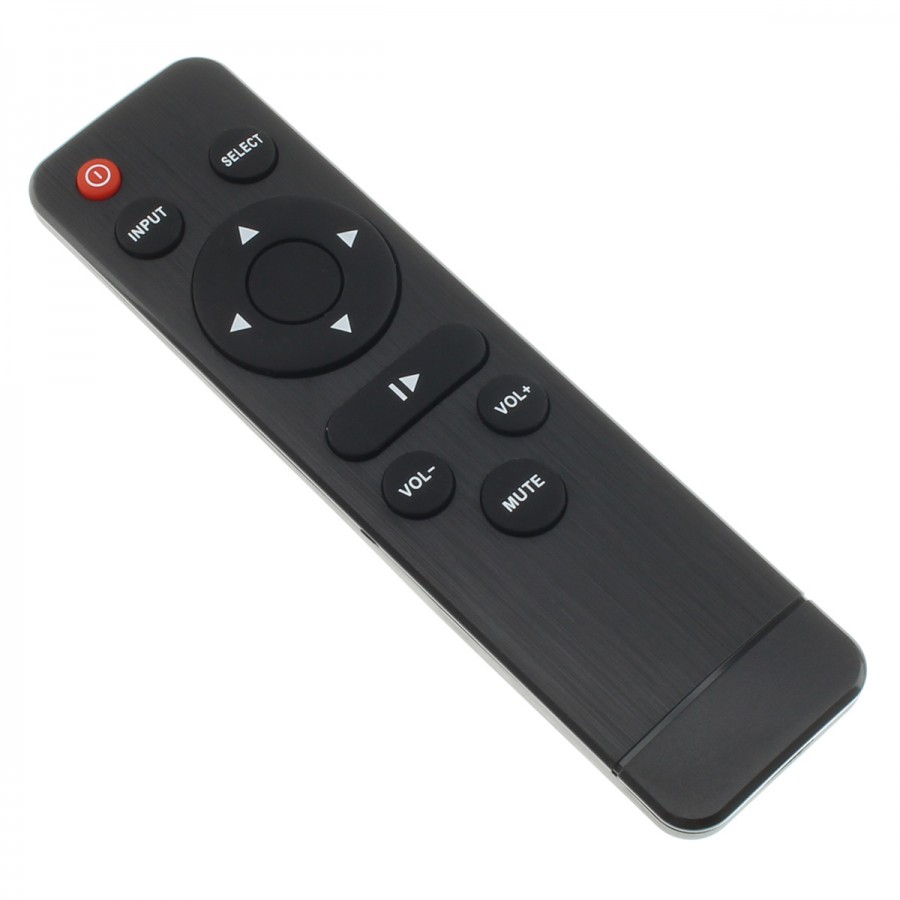
Finally, the infrared receiver communicates both with the microcontroller in charge of driving the DAC chips and with the Raspberry Pi if the EVO-SABRE is used in network drive mode with LIRC configured. The remote control (included) thus centralizes most of the playback functions for great ease of use.
The input selection, volume and standby functions, as well as the filters adjustements are handled by the integrated microcontroller, while the play / pause, previous / next functions are transmitted to the RPI (requires LIRC configuration on GPIO 04)
d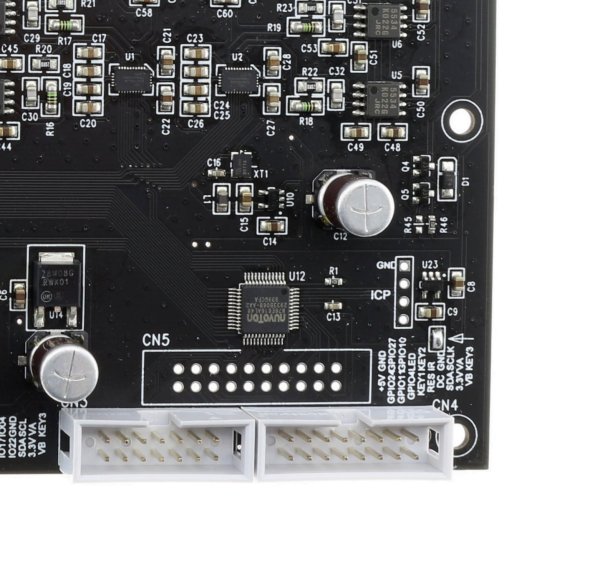
Connector for secondary display
In addition to its display / controller / receiver PCB, the DAC EVO SABRE Audiophonics ES9038Q2M module has an additional connector intended to receive a second 3.12 "256x64 OLED screen connected directly to the Raspberry Pi SPI (CN4).
A pre-configured script to install on your Pi4 is available to directly extract the playback data (Dietpi / LMS). Users versed in Python / UNIX programming can easily adapt or recreate a script to modify its behavior to their liking.
It is then possible to achieve very clever integration for your DAC/Streamer with on the one hand a compact screen / controller dedicated to audio parameters and on the other hand an auxiliary screen dedicated to the metadata of your tracks as well as general parameters related to your project.
Use with Rasperry Pi
The Raspberry Pi is not supplied with the EVO SABRE module. This optional element considerably widens the functionality of the module. Click here to find the suited version.
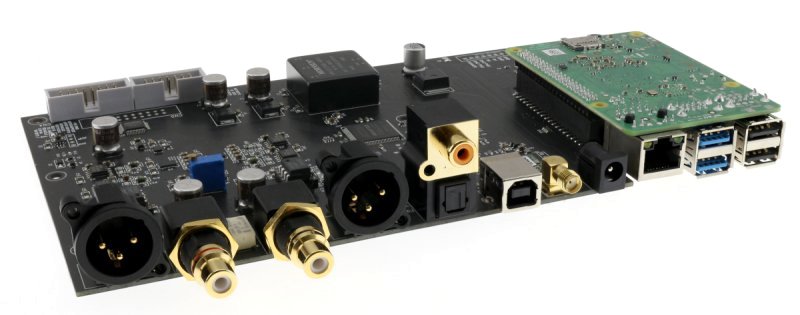
Used in conjunction with a Raspberry Pi 3, 4 or 5, the EVO-SABRE ES9038Q2M becomes a complete dematerialized streaming solution.
The pinout is the most common, compatible with the RPI-DAC driver and present in all distributions.
It is also possible to use the driver for the I-Sabre 9038, found in the Raspberry PI kernel from version 4.19.34.
This allows you to control the volume of the chip directly from the RPI, but the interest is limited insofar as the EVO-SABRE already offers these functions with its remote control and the front encoder.
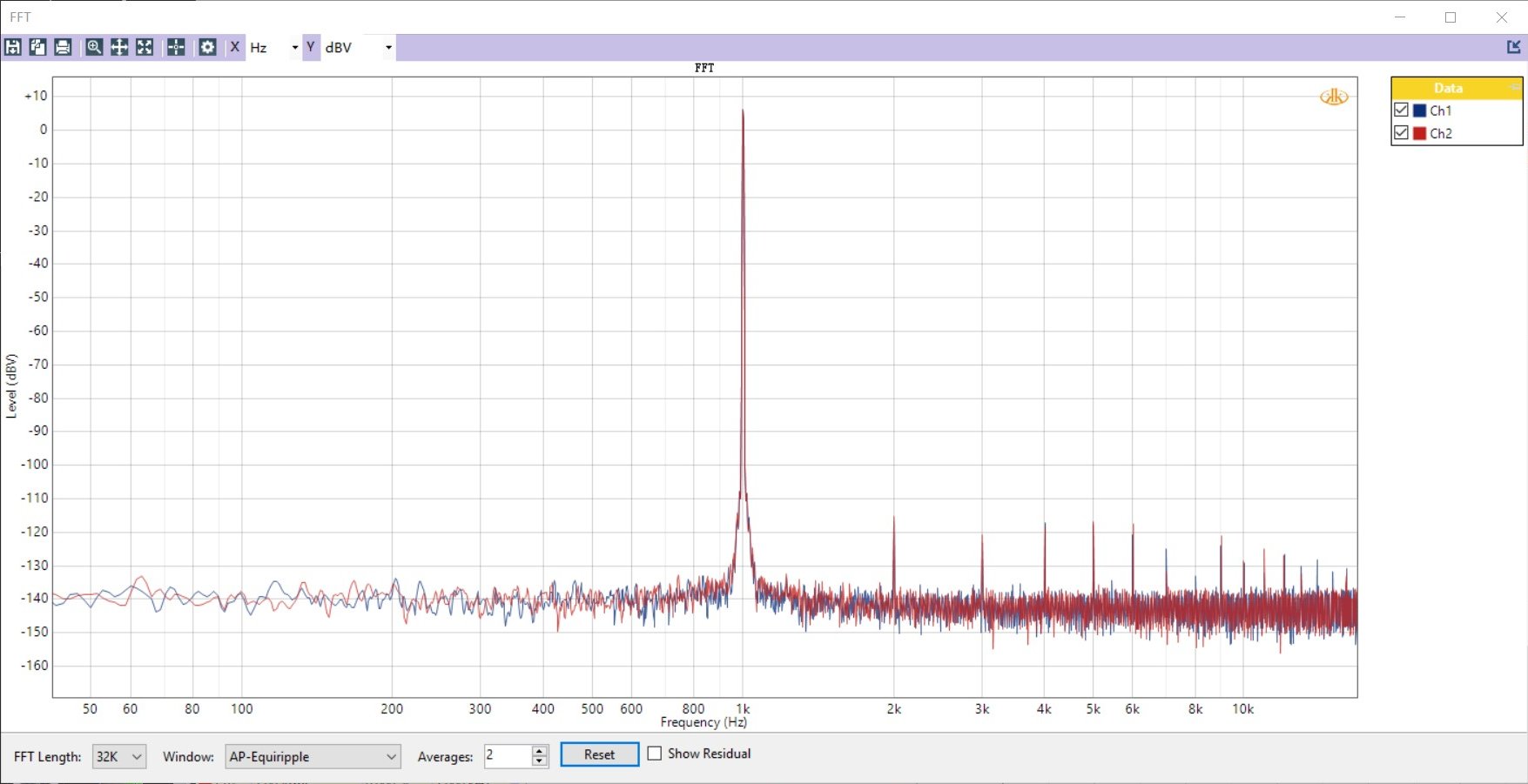
FFT Measure
| Specifications | |
|---|---|
| Type | DAC Module |
| DAC chip | 2x ESS ES9038Q2M |
| Architecture | Balanced |
| Audio Inputs | S/PDIF Coaxial S/PDIF Optical Bluetooth HD (Bluetooth antenna available here) USB-B (XMOS) I2S GPIO (pinout RPI-DAC) |
| Audio Outputs | RCA stereo single-ended (2V RMS) RXL stereo balanced (4V RMS) |
| Sampling rate | USB : 768kHz / DOP256 SPDIF : 192kHz / DOP64 |
| Power Supply | 9VDC (2A minimum) on jack DC 5.5 / 2.1mm (Power supply not included) |
| Idle consumption | 700ma |
| USB interface | XMOS U208 |
| FGPA | Altera Max |
| Raspberry compatibility | Raspberry 3 / 4 / 5 |
| Dimensions | Main PCB : 120 x 225mm (Max height : 32mm) display PCB : 40 x 134 mm |
| Weight | 185g |
| Input | GPIO |
| Input | SPDIF |
| Input | Bluetooth |
| Input | USB |
| Input | Optical |
| Output | XLR |
| Output | RCA |
| DAC / ADC Chip | ES9038Q2M |
| Max sampling rate | DSD256 |
| Max sampling rate | 768kHz |
We deliver all over France, and internationally.
To find out the amount of shipping costs, simply go to your cart once you have added the desired products.
To discover our different services and delivery options, click on the following logos :



Only registered users can post a review. Log in or create an account .
Average votes 4.5 / 5 11 reviews | Why write products reviews ? You can share your feelings about products and help other people by sharing your experience |
Note :
5/5
Date :
2026-04-16
Michael S.
Note :
5/5
Date :
2024-02-13
Peter L.
Ver nice DIY plug and play device
Works best with Volumio, in my opinion. With Volumio and the audiophonics-volumio-plugin, it is possible for me to skip tracks, control volume and shutting down proper with the remote control. Sound is very good - better than Topping DX3pro+, imo.
I paired it with pi3B+, 1GB RAM. Works fine! I build a case out of thin wood plates. Now, got a very good all-in-one STREAMER/DAC for 260 Euro!!! Nice!
But please Audiophonics-Team, make a big HINT in Github, that the old procedure of changing the kernel of raspy in order to get the I-Sabre-driver working, is NOT necessary anymore, because it is implemented in the newer os versions. That costs me hours of work, when i prepared a OS for plexamp!!!
This review has been posted for AUDIOPHONICS EVO-SABRE Balanced DAC 2x ES9038Q2M USB GPIO Raspberry Pi SPDIF Bluetooth XLR RCA Works best with Volumio, in my opinion. With Volumio and the audiophonics-volumio-plugin, it is possible for me to skip tracks, control volume and shutting down proper with the remote control. Sound is very good - better than Topping DX3pro+, imo.
I paired it with pi3B+, 1GB RAM. Works fine! I build a case out of thin wood plates. Now, got a very good all-in-one STREAMER/DAC for 260 Euro!!! Nice!
But please Audiophonics-Team, make a big HINT in Github, that the old procedure of changing the kernel of raspy in order to get the I-Sabre-driver working, is NOT necessary anymore, because it is implemented in the newer os versions. That costs me hours of work, when i prepared a OS for plexamp!!!
Note :
5/5
Date :
2024-02-08
Yassin B.
excellent
j'avais l'ancien modèle dont j'étais très satisfait.
Suite à sa panne, j'en ai profité pour une mise à jour.
Encore mieux.
Pour ceux qui o,t une imprimante 3d, je mets à dispo un boitier :
https://www.thingiverse.com/thing:6473605
bonne écoute,
This review has been posted for AUDIOPHONICS EVO-SABRE Balanced DAC 2x ES9038Q2M USB GPIO Raspberry Pi SPDIF Bluetooth XLR RCA j'avais l'ancien modèle dont j'étais très satisfait.
Suite à sa panne, j'en ai profité pour une mise à jour.
Encore mieux.
Pour ceux qui o,t une imprimante 3d, je mets à dispo un boitier :
https://www.thingiverse.com/thing:6473605
bonne écoute,
Note :
4/5
Date :
2023-10-31
Didier a.
Emballage un p
Pour ce type de produit haut de gamme, je m'attendais à le voir fourni dans une boite et avec un guide d'utilisation et de branchement. J'ai donc été déçu de le voir emballé dans une enveloppe à bulles entourée d'une feuille de carton et sans aucun document d'accompagnement (heureusement il y a de la documentation sur le site). Donc emballage robuste mais pas très "classe" pour ce produit "Hi-Tech". Sinon, le produit à l'air de qualité.
This review has been posted for AUDIOPHONICS EVO-SABRE Balanced DAC 2x ES9038Q2M USB GPIO Raspberry Pi SPDIF Bluetooth XLR RCA Pour ce type de produit haut de gamme, je m'attendais à le voir fourni dans une boite et avec un guide d'utilisation et de branchement. J'ai donc été déçu de le voir emballé dans une enveloppe à bulles entourée d'une feuille de carton et sans aucun document d'accompagnement (heureusement il y a de la documentation sur le site). Donc emballage robuste mais pas très "classe" pour ce produit "Hi-Tech". Sinon, le produit à l'air de qualité.
Note :
5/5
Date :
2023-02-27
gilles b.


 English
  Français