New Customer?
Create your accountNo products
Prices are tax included
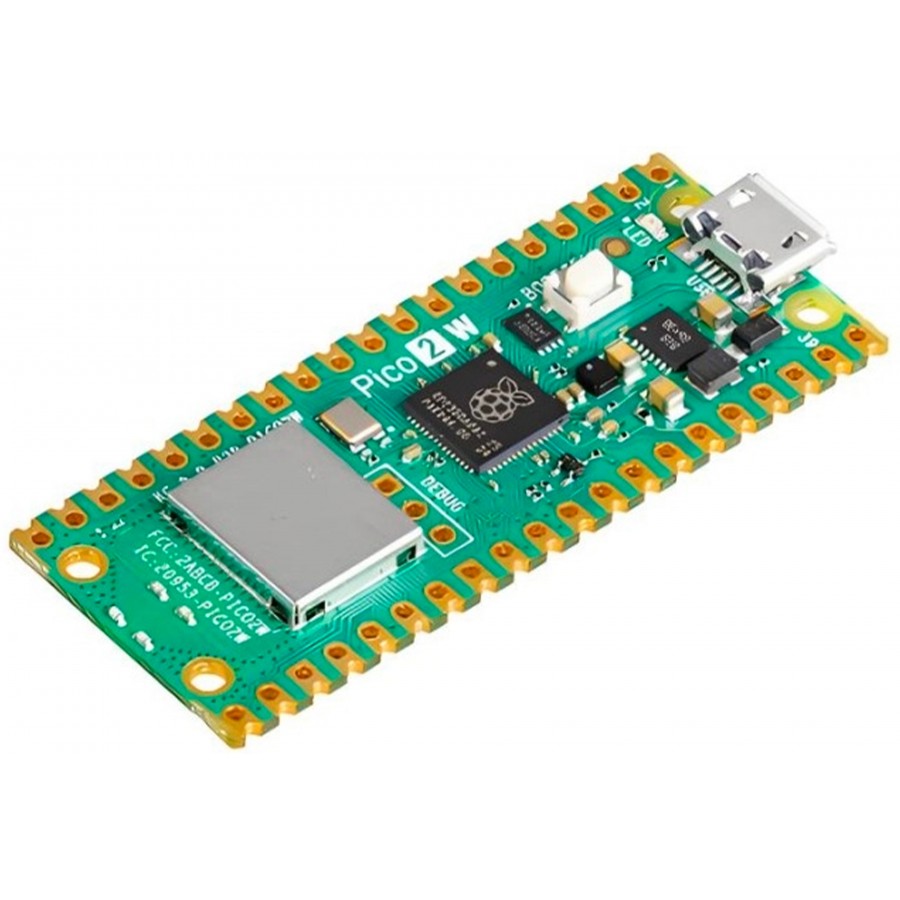
RASPBERRY PI PICO 2 W

No loyalty points for this product.
Viewed products


![[GRADE C] HIFIBERRY DIGI+ SPDIF Digital Interface Board for Raspberry Pi 24bit 192kHz](https://www.audiophonics.fr/74409-thumb_default/hifiberry-digi-spdif-digital-interface-board-for-rasberry-pi-24bit-192khz.jpg)
![[GRADE B] AUDIOPHONICS MPC6 V2 Power Distribution Case 6 ports Black Aluminium](https://www.audiophonics.fr/62549-thumb_default/audiophonics-mpc6-v2-power-distribution-case-6-ports-black-aluminium.jpg)
![[GRADE A] CRINEAR DAYBREAK In-Ear Monitors IEM Dynamic Balanced Armature Planar Magnetic 20 Ohm 105dB 2Hz-40kHz](https://www.audiophonics.fr/74194-thumb_default/crinear-daybreak.jpg)

![[GRADE S] SHANLING M6 PRO HiFi DAP Compact Music Player DAC 2x AK4497 32bit 768kHz DSD128 Titanium](https://www.audiophonics.fr/72951-thumb_default/shanling-m6-pro-hifi-dap-compact-music-player-dac-2x-ak4497-32bit-768khz-dsd128-titanium-sbs.jpg)
![[GRADE A] SHANLING CD-S100 (23) CD Player DAC AK4493 Sanyo HD850 USB 32bit 384kHz DSD512 Black](https://www.audiophonics.fr/69128-thumb_default/shanling-cd-s100-23-cd-player-dac-ak4493-sanyo-hd850-usb-32bit-384khz-dsd512-black.jpg)
![[GRADE A] SABAJ A20D 2023 DAC AK4499EX Headphone Amplifier TPA6120A2 XMOS XU316 Bluetooth 5.0 32bit 768kHz DSD512 MQA](https://www.audiophonics.fr/69108-thumb_default/sabaj-a20d-2023-dac-ak4499ex-headphone-amplifier-tpa6120a2-xmos-xu316-bluetooth-50-32bit-768khz-dsd512-mqa.jpg)


Raspberry Pi Pico 2 W 520kB SRAM WiFi Bluetooth 5.2
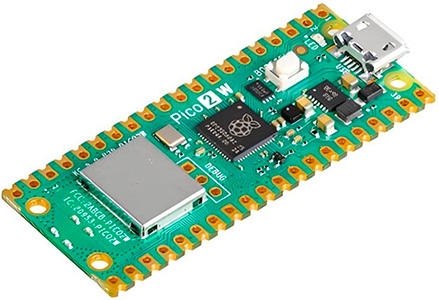
The Raspberry Pi Pico 2 W is a microcontroller board designed for embedded integration, built around the RP2350 chip developed by Raspberry Pi in the United Kingdom. It combines two ARM Cortex-M33 cores clocked at 150 MHz, 520kB of SRAM, and 4MB of flash memory to provide deterministic I/O processing in a compact, energy-efficient form factor. In addition to this hardware base, it features integrated Wi-Fi connectivity, allowing embedded projects to be extended to include monitoring, updating, or data exchange functions without the need for external modules.
Beyond improved performance, the RP2350 introduces a dual-core, dual-environment architecture, allowing the choice between a pair of ARM Cortex-M33 cores or a pair of open-hardware cores, enabling the microcontroller's behavior to be precisely adapted to project constraints. Programmable in C/C++ and MicroPython, the Pico 2 W facilitates iterative development while maintaining direct access to digital interfaces: an asset for controlling sensors, actuators, or specialized buses, while maintaining controlled latency.
This specialization extends to security: the integration of TrustZone for Cortex-M, signed boot, 8kB of anti-tamper OTP for key storage, as well as SHA-256 hardware acceleration and a hardware random number generator, provide a reliable foundation for connected applications.
Raspberry Pi Pico 2 W: The perfect candidate for a DIY DSP
This onboard orientation naturally extends to specialized audio applications. The Pico 2 W can be used as the hardware basis for a DIY DSP project such as DSPi, firmware that transforms the card into a USB audio interface with a real-time digital processing engine. In this configuration, the microcontroller provides multi-band parametric equalization, active filtering for multi-channel systems, speaker time alignment, and subwoofer management via PDM output, while distributing the computational load across both cores to maintain low latency.
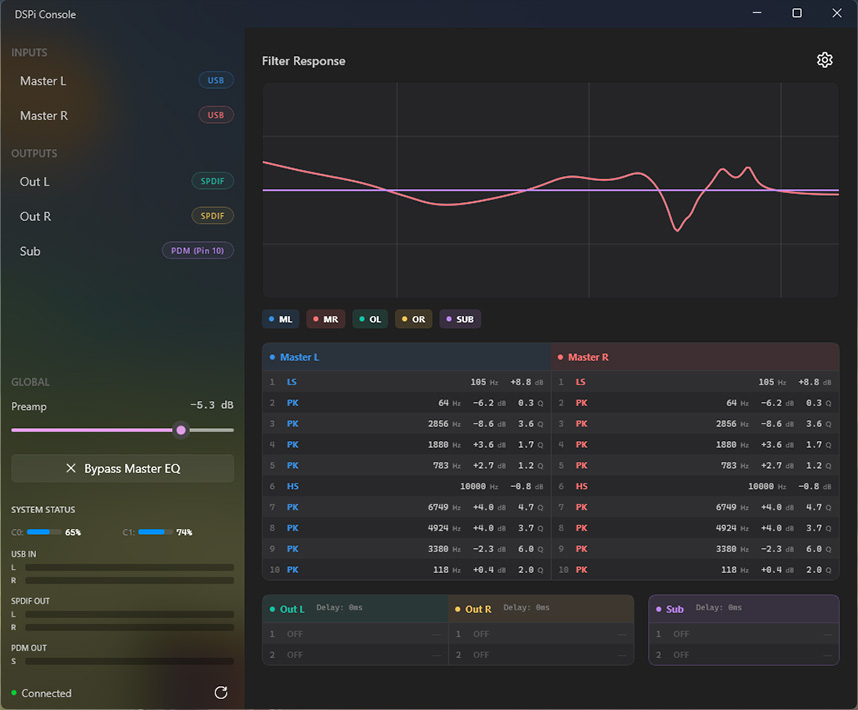
Beyond simple processing, this approach leverages multiple S/PDIF outputs and flexible GPIO assignment to directly drive external DACs or design a complete active architecture, while the Pico 2 W's Wi-Fi connectivity paves the way for remote monitoring or control. The result is a compact platform capable of serving as a dedicated audio processor in a DIY system, without the need for a permanently running computer.
DPSi GitHubTechnical characteristics
| Specifications | |
|---|---|
| Product type | Microcontroller (MCU) |
| Processor | Dual Arm Cortex-M33 Dual RISC-V Hazard3 |
| RAM memory | 520kB SRAM |
| Connectors | USB-C GPIO 26 pins |
| Networks | Wifi 2.4GHz 802.11n Bluetooth 5.2 |
| Internal controller | 2x UART 2x SPI 2x I2C 2x UART 3x ADC 12 bits 16x PWM channels |
| Storage | 4MB QSPI Flash |
| Operating temperature | -20°C - +85°C |
| Mean time between failures (MTBF) | 182 000 hours |
| General | |
|---|---|
| Dimensions | 21 x 51.3 x 3.9mm |
| Weight | 3g |
| Package | Sold by unit |
We deliver all over France, and internationally.
To find out the amount of shipping costs, simply go to your cart once you have added the desired products.
To discover our different services and delivery options, click on the following logos :



No reviews at this time.

 English
  Français